Zagreb is the capital and largest city of Croatia and it is known as “The City with a Million Hearts”. Very quickly you will see hearts – called licitars, for sale all around the city. These hearts, like gingerbread, are more than just the symbol of the city, they are also part of the culture and are given as gifts as a token of love and friendship. Croatia is a fusion of Central European and Mediterranean cultures. Croatians are also the inventors of the parachute, the fountain pen, alternating current (electricity) and the necktie.
Epic things to see and do in Zagreb
- St Mark’s Church
- Catherine’s Square
- Tkalciceva Street
- Dolac Market
- The Zagreb Cathedral
- Ban Jelacic Square
- Ilica Street
- Lenuci Horseshoe
- Day trip to Plitvice National Park
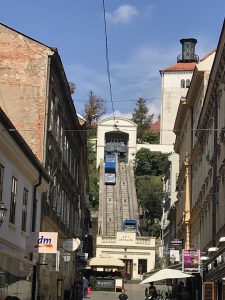
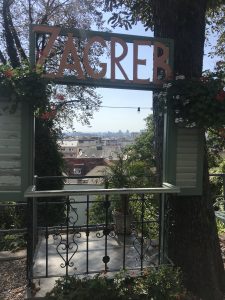
Zagreb is a walkable city and is divided into two sections – an upper city and a lower city. You can climb steps, or you can reach the upper city by using the world’s shortest cable Funicular. At the top of the funicular is Lotrscak Tower. The tower is a well-preserved part of the city’s past fortification and houses the Gric cannon, which is fired and heard throughout the city, each day at noon. You can also climb to the top for a panoramic view. If you turn left from the funicular exit, you can stroll down the Strossmayer Promenade. The promenade is lined with scenic views of the lower city, benches, and trees. It is a great place to rest in the shade with a cold beverage on a hot day. You can also reach upper town by ambling up the charming cobblestone street called Radiceva. It is lined with craft shops, and boutiques and at the top stands a bronze statue of St George on his horse, with a slayed dragon at his feet.
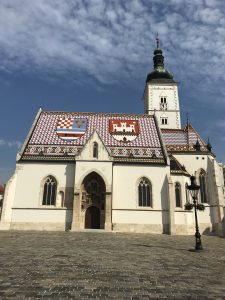
St. Mark’s Church is in the upper city in St Mark’s square. The square is also home to the Croatian Government, Parliament, and the Constitutional Court. But it is 13th century church that steals the show with its colorfully tiled roof. The roof has the medieval coat of arms of Croatia, Dalmatia and Slavonia on the left side and the emblem of Zagreb on the right. It is stunning!
Also, near this area, you can visit the Museum of Broken Relationships, the Croatian History Museum, the Croatian Museum of Naïve Art, Klovicevi Dvori Gallery, Museum of Torture, the Zagreb City Museum and incredibly – the Museum of Mushrooms. The Gric tunnel is fun to walk through as well. It is an underground tunnel built as an air raid shelter during WW11. Today it is used as a shortcut that connects several city streets.
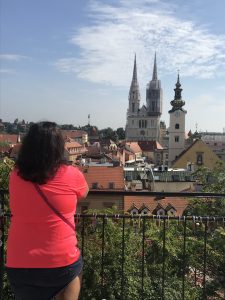
Catherine’s Square is home to the striking Baroque church of Catherine. Just behind the church is the best city view from the Gradec plateau. Here you can gauze at the incredible cathedral in the distance! Before reaching the cathedral, however, you can have an opportunity to explore the Stone Gate, the Bloody Bridge, Tkalciceva street and the Dolac market area.
Stone Gate was rebuilt after a fire swept the city but spared a painting of the Virgin Mary. So, the gate became dedicated to Mary and is a place of worship, prayer and candles in the middle of the city.
The Bloody Bridge is no longer bloody but was once the spot of dispute between neighboring hilltop settlements. Today, the stream is paved over and the bridge removed but the alleyway stands in remembrance.
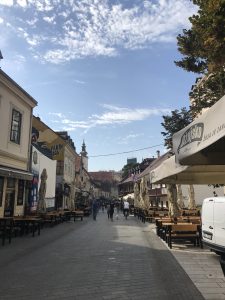
Tkalciceva Street – referred to by locals as Tkalca, it is a pedestrian street of pastel colored townhouses and adorable cafes. The coffee culture is very important here in the city and Saturdays from 11:30 am – 1:30 pm is the prime time for Croatians to meet up with friends and drink coffee.
Dolac Market – an open-air farmer’s market filled with fresh produce, red umbrellas and humming with activity, this is the perfect place to catch the flavor of the local people and pick out a fresh, tasty snack. The pumpkin seeds I chose where the best I have ever had! There is also a fish market along the side that is fun to stroll through.
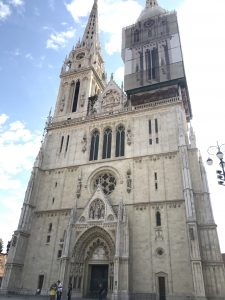
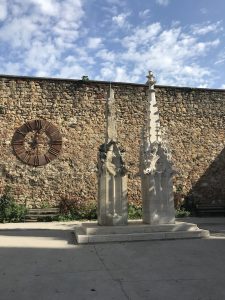
The Cathedral – Zagreb’s cathedral would be impossible to miss due to its enormous size. It is the tallest building in Zagreb and has stood for 8 centuries, although it has been damaged several times by fires and earthquakes. It was undergoing some cleaning and renovations when I was there, and they had several columns you could look at – a before and after – that were very interesting. You can still wander inside and there is much to see inside as well.
Heading down the hill from Cathedral, you enter the lower town and the Ban Jelacic Square. This is the main city square- the very heart of Zagreb. When I was in town, there was a busy open-air market, tons of people around and a local band were playing as well. It is said that the most popular meeting spot for locals is “under the clock” in this square. Don’t miss this spot!
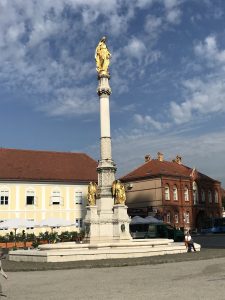
From the square head to Petar Preradovic Square or Flower Square, to see the flower stands and try some coffee here in one of the many coffee places. After a little caffeine, continue to stroll down Ilica Street - a long street that is a vibrant shopping thoroughfare.
There are a lot of museums in this capital city. In the lower town, you can find the Ethnographic Museum, Archeological Museum, Technical Museum Nikola Tesla, Museum of Arts and Crafts, Mestrovic Atelier Museum, Modern Gallery, Mimara Museum, and the Museum of Illusions. In addition, Zagreb is home to the Vatroslav Lisinski Concert Hall, the Croatian Music Institute, the Academy of Music, the Croatian National Theatre and Zagreb University.
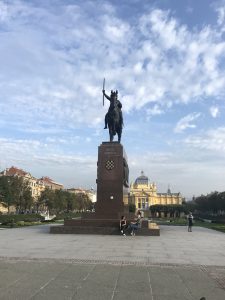
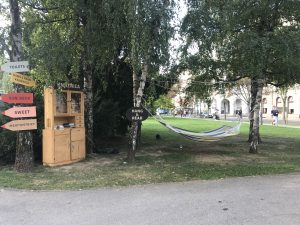
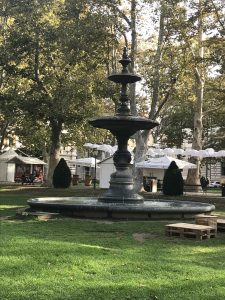
Nikola Zrinski Square is part of the Lenuci Horseshoe and a great area in the lower town that boasts many festivals and special events. Additionally, don’t miss Zagreb’s first fountain – referred to by locals as “the mushroom” and the meteorological post from 1884 with vintage weather instruments. The 19th century Music Pavilion is also here. The area was busy with people, vendors, a market, reading areas and a burger and beer festival when I visited. It is all outside and clearly an area that everyone was enjoying. As you continue towards the train station, note King Tomislav Square. A statue of the king, Croatia’s first, proudly fills the square. Across the street is the historic, grand central train station. It is here that you can catch a train to other areas of the country. Out front, you can hop aboard a tram to take you to other areas of the city.
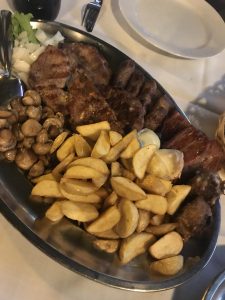
We found the food to be wholesome and good. Meats and potatoes, pizza and pasta and coffee and burgers! You won’t be hungry! And although the official language is Croatian, most people spoke English as well and we had no problems getting around or ordering food.
Take a day and explore Zagreb before you head off to explore the coastal cities! Better yet, plan two days here and spend your second day visiting the UNESCO heritage site of Plitvice National Park.
Plitvice National Park – is an ensemble of 16 natural lakes and countless number of waterfalls. The turquoise waters, the trees, the views and breathtaking waterfalls…. So incredibly beautiful. It is about 80 miles from Zagreb and once there you can walk the path through the park. The path is hilly and can be slippery so please wear appropriate footwear and be prepared to walk a good 5 miles. And do prepare yourself for the crowds - but go anyway. There are many ways to get to the park – rent a car, take a bus or join a tour. If you love nature you will not want to miss this incredible place! Pictures do not do it justice.
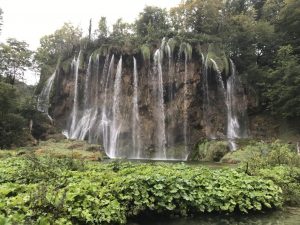
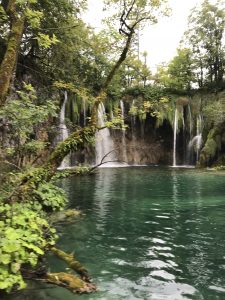
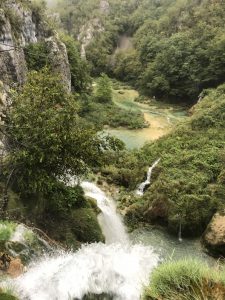
Overall – If you are flying into Zagreb and have the time, it is a nice city to explore with loads of history. Especially loved the Plitvice National Park with all the waterfalls – we all agreed that the park would be one we would like to visit several times throughout the year just to experience what beauty each season would bring. It is an easy city to walk and enjoy so “happy travels” – sretna putovanja!